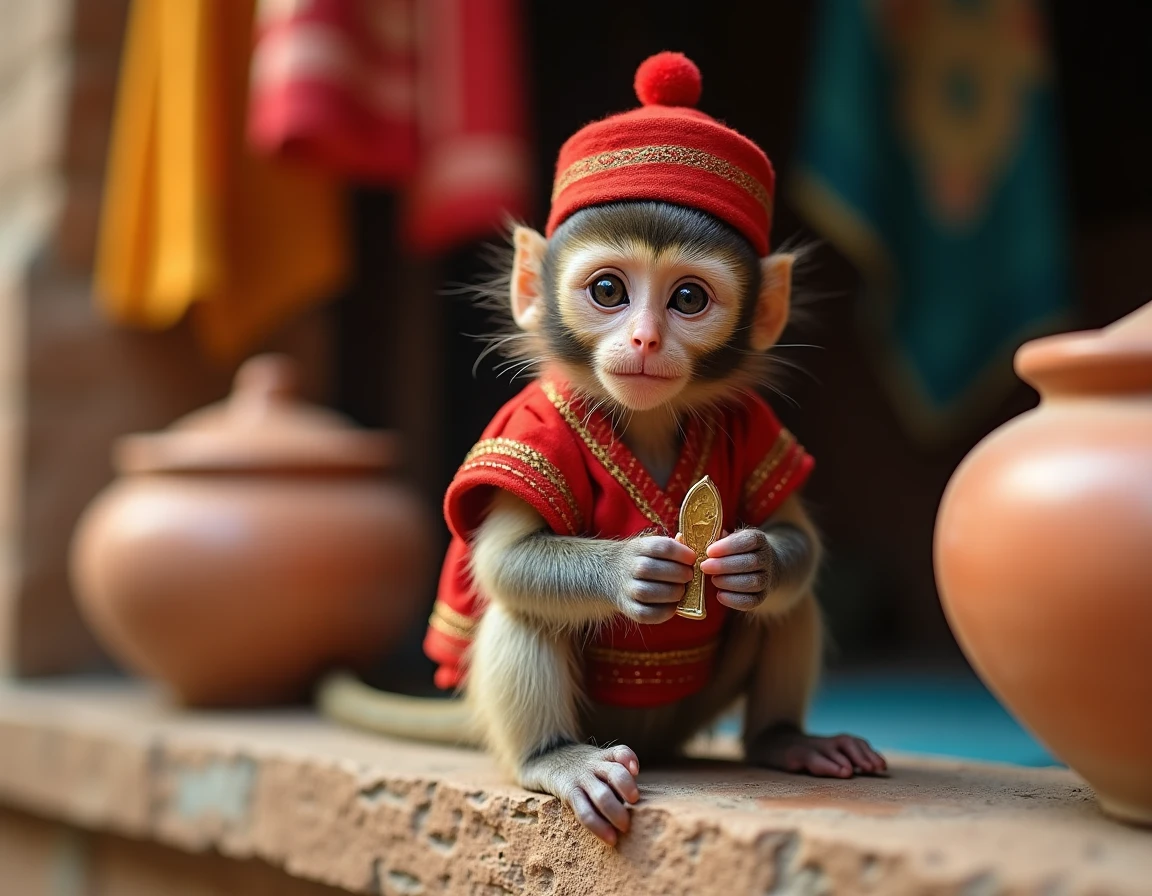
When revisiting Aladdin from 1992, Abu grabs attention from the very first minutes in the Agrabah market. This little monkey doesn’t just follow the hero: he steals bread, causes chases, and forces Aladdin to reveal his generosity. However, outside of the original film, his presence in the Disney universe has significantly diminished over the years.
Abu and the Cave of Wonders: the gesture that changes everything in Aladdin
The Cave of Wonders is often talked about as the turning point of the film, but it is Abu who triggers the catastrophe. Aladdin has received a simple instruction: touch nothing but the lamp. Abu, on the other hand, spots a gigantic ruby set in a statue.
His instinct as a thief turns the scene upside down. The cave collapses, the Magic Carpet intervenes, and Aladdin finds himself trapped with the lamp and a sheepish monkey. Without this gesture from Abu, the Genie would never have been freed. The character’s kleptomania is not a gratuitous gag: it serves as a narrative engine to kick off the second act of the film.
To better grasp the significance of each memorable sequence of Abu the monkey in Aladdin Disney, one must observe how each scene he is in alters the trajectory of the story, not just the comedic atmosphere.
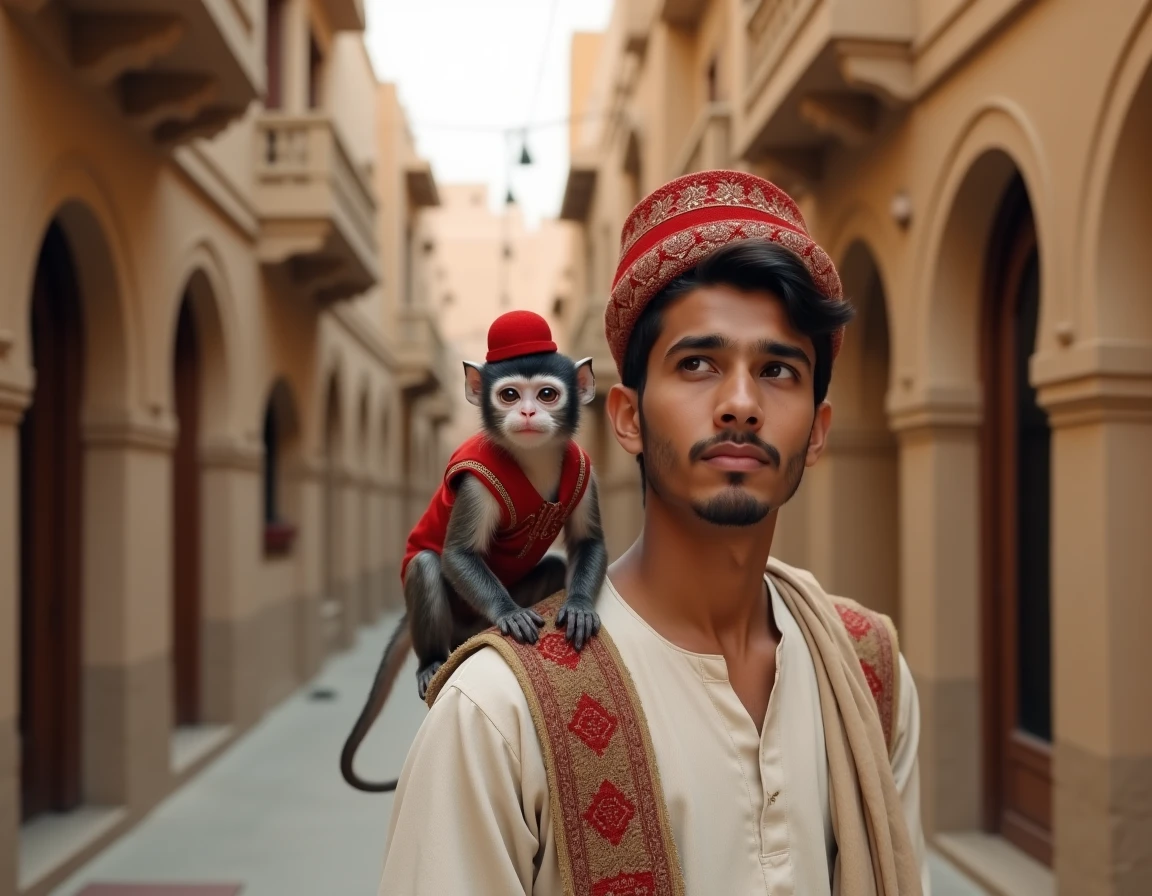
Transformation into an elephant: Abu as a spectacle tool in service of Aladdin
The scene where the Genie transforms Abu into an elephant for the triumphant entrance of “Prince Ali” in Agrabah deserves attention. We remember it as a funny moment, but it serves a precise function: to make Aladdin’s deception credible in front of Jafar and the Sultan.
Abu the elephant is not just a visual gag. He carries Aladdin, impresses the crowd, and helps build the illusion of a rich and powerful prince. Abu’s visible discomfort in this elephant’s body also reflects Aladdin’s lie. The monkey is uneasy because the situation is false, and the animation shows this without a word of dialogue.
What Abu’s non-verbal animation conveys
Abu does not speak in the traditional sense. He makes sounds, makes faces, waves his arms. All his communication is through body language. Disney animators used this constraint to create a expressive character without written lines.
When Abu crosses his arms in front of Jasmine at the beginning of the film, we understand his jealousy. When he reaches for the ruby in the cave, we read his obsession. This non-verbal approach makes him more like a pantomime character than a talkative sidekick like Iago, Jafar’s parrot, who operates on the opposite register with constant dialogue.
Disney Sidekick: why Abu has lost his place in the current ecosystem
This is the point that most articles about Abu do not address directly. His presence in Disney parks has significantly declined between the late 2010s and today. He is hardly seen anymore in meet-and-greets or regular parades.
- Characters like Stitch, Olaf, or Pascal now occupy the sidekick slots in events and merchandising
- Abu has no dedicated film or series, unlike secondary characters from other Disney franchises
- His media exposure depends entirely on the Aladdin franchise, which has not produced major animated content since the live-action remake
This eclipse says a lot about Disney’s strategy regarding sidekicks. The brand favors characters capable of carrying merchandising or derivative content on their own. Abu, despite his likability, remains a supporting character without potential for narrative emancipation.
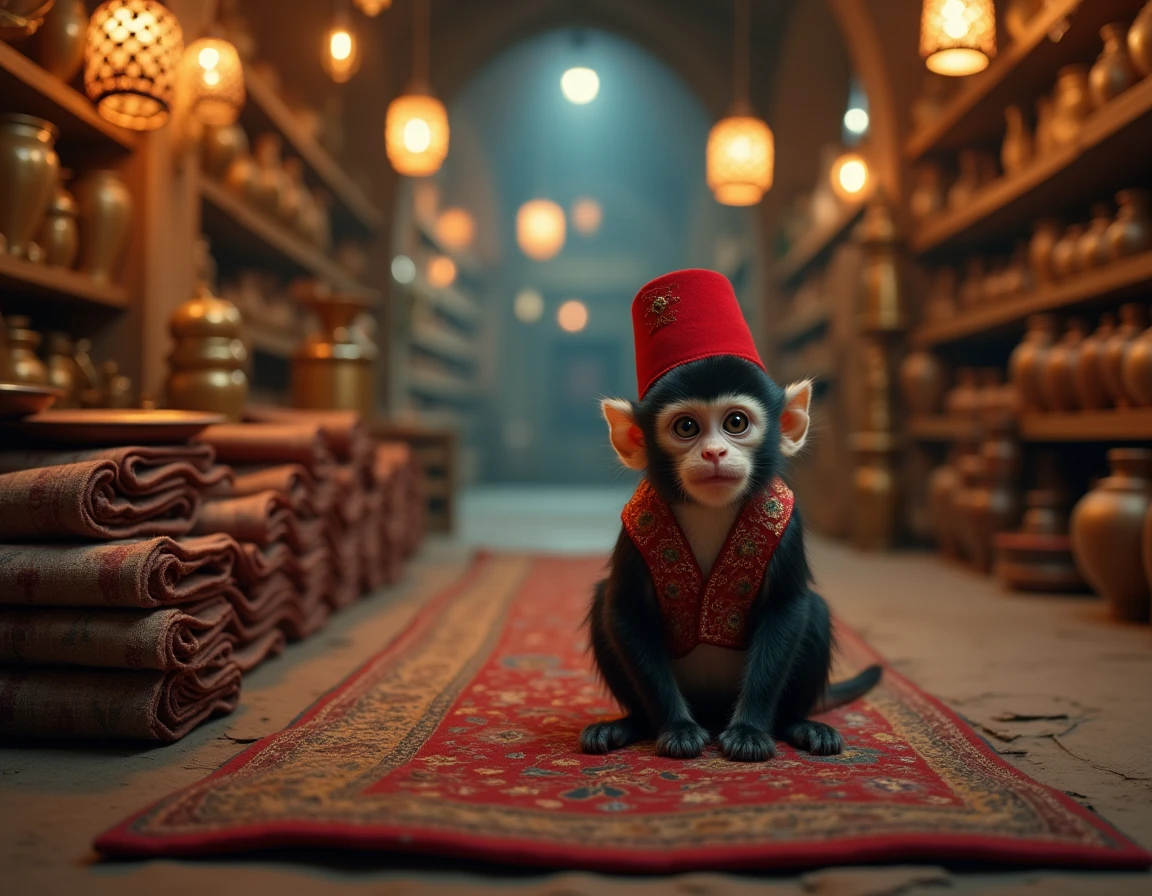
Abu facing Iago and the Genie: a trio of complementary registers
In the 1992 film, three secondary characters share the comedic space: Abu, Iago, and the Genie (voiced by Robin Williams). Each occupies a distinct register.
- The Genie operates on verbal improvisation and cultural references, with overflowing energy driven by Williams’ vocal performance
- Iago, voiced with a recognizable nasal tone, embodies sarcasm and calculated cowardice alongside Jafar
- Abu occupies the physical and emotional register, without articulated speech, making him more universal but less adaptable to modern formats
This trio works perfectly within the framework of the feature film. However, when Disney expands the franchise to other media, the Genie and Iago translate better due to their verbal dimension. Abu, on the other hand, loses impact as soon as we leave traditional animation.
Abu in the live-action remake of Aladdin: a sidelined monkey
The 2019 live-action film retained Abu, but significantly reduced his role. The CGI character retains his main traits (the vest, the thieving behavior), but does not regain the same emotional depth as in the animated film.
The shift to visual realism limits the exaggerated expressions that were Abu’s strength in animation. A real digital capuchin monkey cannot cross its arms with the same comedic intensity as a character drawn by seasoned animators. The remake illustrates this difficulty of transposition: what works in stylized animation does not always survive realism.
Abu remains a character whose strength lies in his original film. His loyalty to Aladdin, his thief instincts, and his ability to advance the plot through simple gestures make him a unique Disney sidekick. Whether the brand chooses to keep him sidelined today does not change the effectiveness of his initial design: a silent companion who says more than many characters with dialogue.