A sloping clayey terrain of a few percent, a high water table, or a recently tightened local urban plan regarding impermeabilization: it is often a local constraint that determines the feasibility of a tennis court well before the choice of surface. Understanding these technical parameters from the outset avoids additional costs and rework that can burden the budget and timeline.
Permeability and rainwater management: the constraint that guides often overlook
Since the Climate and Resilience laws and the goal of Zero Net Artificialization, more and more local urban plans impose strict limitations on impermeable surface area on the plot. Specifically, a tennis court represents several hundred square meters of ground coverage, and urban planning services now require on-site water management: swales, stormwater basins, or permeable surfaces.
The French Tennis Federation has also strengthened its technical requirements regarding the permeability and drainage of new courts, particularly in urban and peri-urban areas. These requirements are no longer limited to surface flatness and roughness. They concern the infiltration capacity of the support structure, regardless of the chosen surface (permeable concrete, resin, synthetic grass, clay).
Before even contacting a builder, it is advisable to conduct a soil study that incorporates these hydrological parameters. A geotechnical study office assesses the absorption capacity of the land, the depth of the water table, and the natural slopes. This diagnosis then guides the choice between a fully draining system and a semi-permeable solution, with direct consequences on the foundation cost.
To better understand the procedures, types of surfaces, and technical trade-offs, building a tennis court with an expert helps frame each parameter from the design phase.
Orientation, location, and site access: three decisions that lock in the project
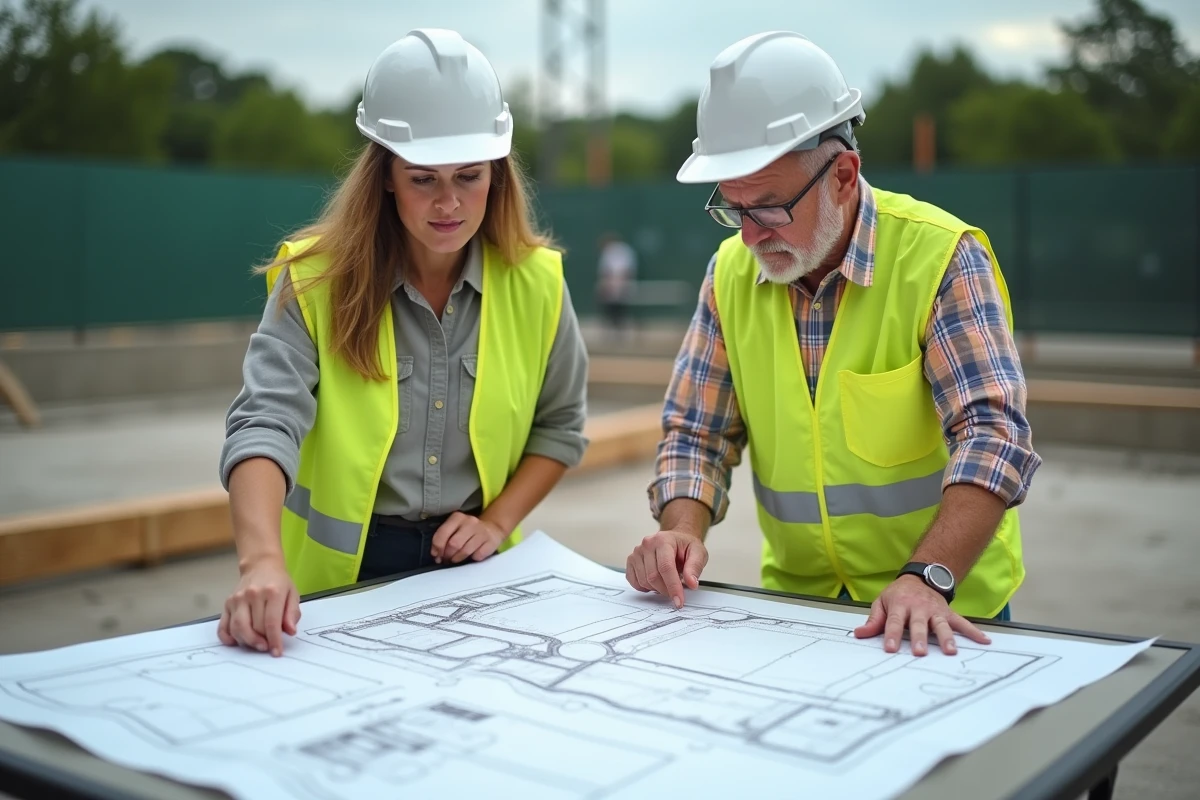
People often think of the surface first. However, the placement of the court on the plot is the most structuring choice, as it determines playing comfort, the feasibility of the work, and compliance with regulatory distances.
North-south orientation and glare
The north-south axis remains the reference to avoid direct glare during serves. If the plot does not allow it, a shift of a few degrees towards the northeast or northwest may be tolerated, but any east-west orientation significantly degrades playing conditions in the morning and late afternoon.
Clearances and distances to boundaries
The FFT regulatory dimensions for competition are 18 m x 36 m, but recreational use allows for reduced margins. However, lateral clearances and backcourt clearances (several meters on each side) must be planned, which significantly increases the total footprint. The distances to boundary lines, set by the local urban plan or subdivision regulations, add an additional constraint.
Access for machinery and delivery
Excavation requires the passage of mechanical shovels and dump trucks. If access to the plot is narrow, handling costs can quickly escalate. This is a point to verify during the site visit with the project manager, before any quotes.
Choice of tennis court surface: technical criteria, not just aesthetic ones
The surface determines ball speed, joint comfort, and especially the annual maintenance load. Comparing options on these three axes helps make a decision.
- Permeable concrete: very good durability, limited maintenance, fast surface. It meets the permeability requirements of recent local urban plans and is suitable for both clubs and individuals who want low maintenance.
- Synthetic resin: intermediate playing comfort, good shock absorption, uniform surface. Feedback varies on lifespan depending on installation quality and UV exposure.
- Synthetic grass: high cushioning, suitable for recreational play, sand or granule filling to be periodically renewed. Its appearance and ball speed differ from traditional tennis.
- Clay (natural or artificial): slow play, maximum joint comfort, but heavy daily maintenance (watering, brushing, restoration). The artificial version reduces this load without eliminating it.
The choice also depends on the overall project. A multi-sport club with adjacent padel or tennis courts will often prefer resin or permeable concrete, which are more versatile and less demanding in maintenance than clay.
Excavation and foundations of a tennis court: where longevity is determined
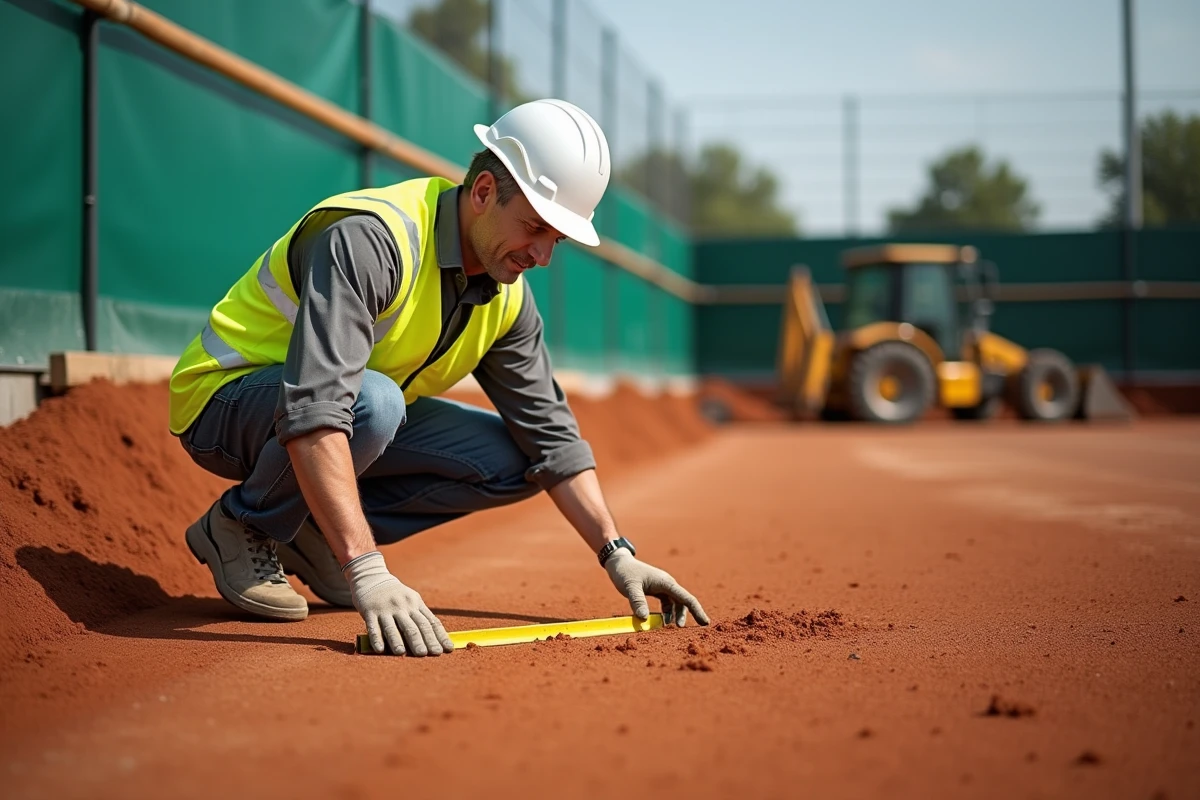
Excavation often represents the heaviest part of the project, well before the surface. It includes stripping the topsoil, leveling, laying foundation layers (compacted gravel, base layer), and installing the drainage network.
A flatness defect of a few millimeters creates puddles that degrade the surface and disrupt the bounce. Checking with a several-meter rule is standard on a serious construction site. It is also at this stage that peripheral drains and collection pits are installed, sized according to the initial soil study.
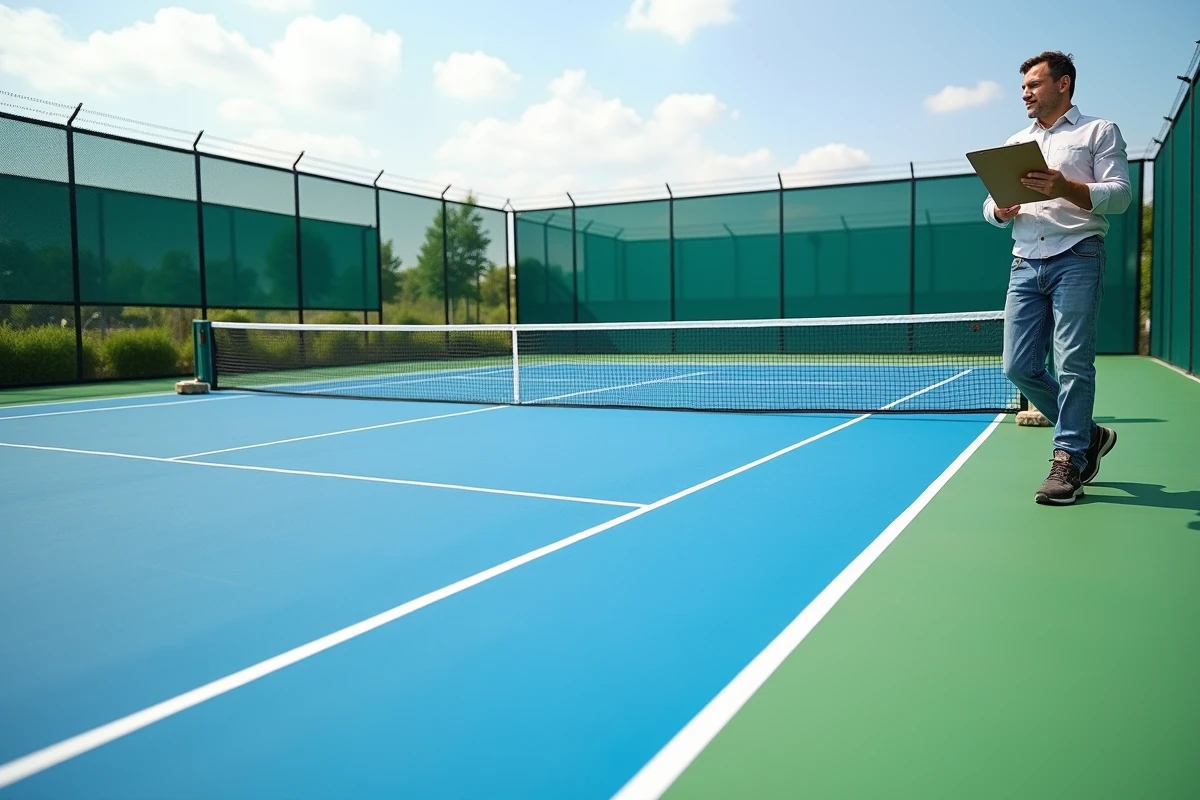
Next come the finishing works: laying the surface, marking the regulatory lines, installing the net posts, and possibly lighting or fencing. Each layer must have time to stabilize before the next, which explains why construction timelines often extend over several weeks, excluding weather-related delays.
Maintenance and renovation of a tennis court: anticipate from the design phase
Building a court without considering its maintenance is like buying a car without a fuel budget. The type of surface dictates the frequency and cost of maintenance: high-pressure cleaning for resin, brushing and refilling for synthetic grass, watering and leveling for clay.
Renovation occurs more or less late depending on the quality of the foundation and the intensity of use. A well-drained court, with a properly compacted foundation, postpones by several years the time when the surface will need to be redone. Planning for permanent access for a small cleaning machine or maintenance vehicle is a design detail that simplifies long-term management.
Choosing a builder who also provides maintenance avoids discovering, after delivery, that no one in the area knows how to maintain the installed surface. This is a selection criterion at least as decisive as the initial project price.