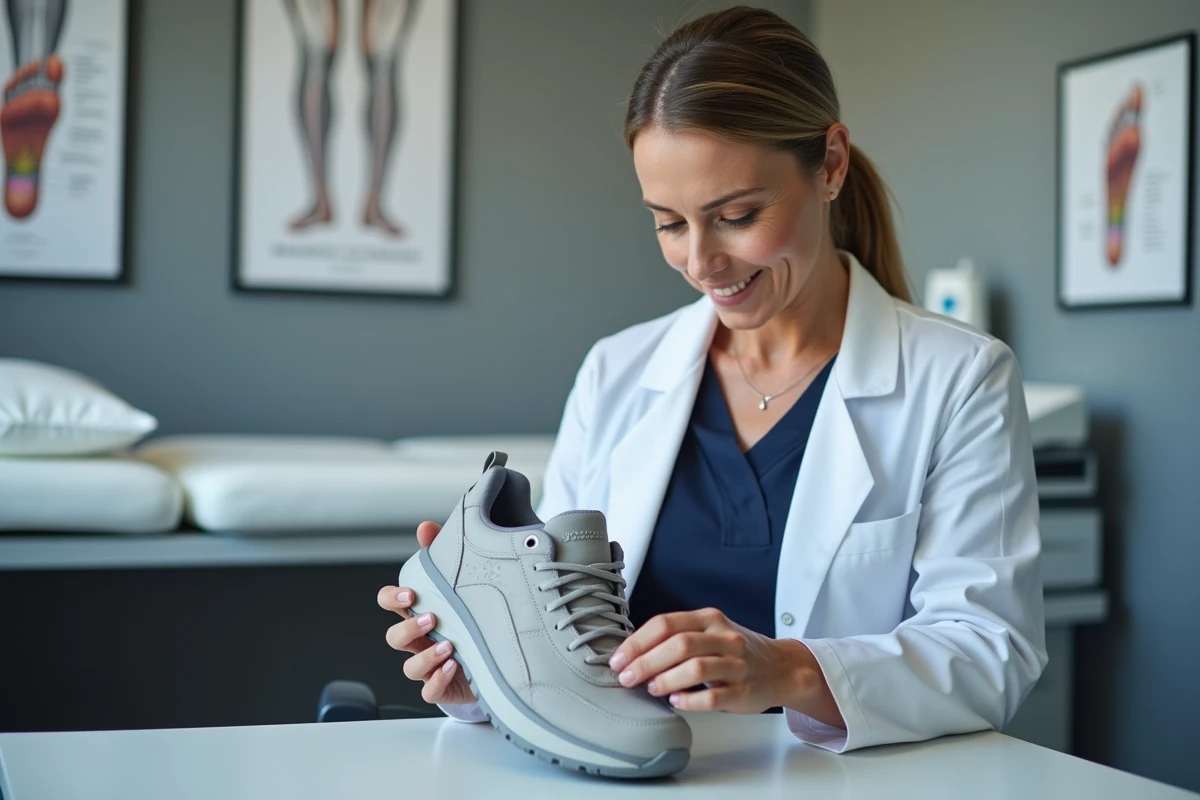
You have been wearing Skechers for months and your feet seem to appreciate it. Then one day, a pain under the heel appears for no obvious reason. The comfort felt during the first try-on does not guarantee good support over time, and podiatrists regularly observe this in consultations. Their position on the Skechers brand is more nuanced than a simple “for” or “against”: it depends on the model, the foot morphology, and the intended use.
APMA Seal of Acceptance: what this podiatric validation changes
Before discussing subjective comfort, an objective benchmark deserves to be established. Several Skechers lines, notably Arch Fit and certain Slip-ins models, have obtained the Seal of Acceptance from the APMA (American Podiatric Medical Association). This label means that a committee of American podiatrists has examined these models and deemed that they promote foot health for the use for which they are designed.
This point is often misunderstood. The validation pertains to specific models, not to the Skechers brand as a whole. A pair of lifestyle Skechers without a rigid heel counter does not have the same status as an Arch Fit validated by the APMA. When looking for a podiatrist’s opinion on Skechers, this distinction by range is the first thing to check.
Not all Skechers models are equal in the eyes of health professionals. Podiatrists who recommend the brand direct towards structured references, not the entire catalog.
Skechers cushioning and memory foam sole: relief or biomechanical trap?
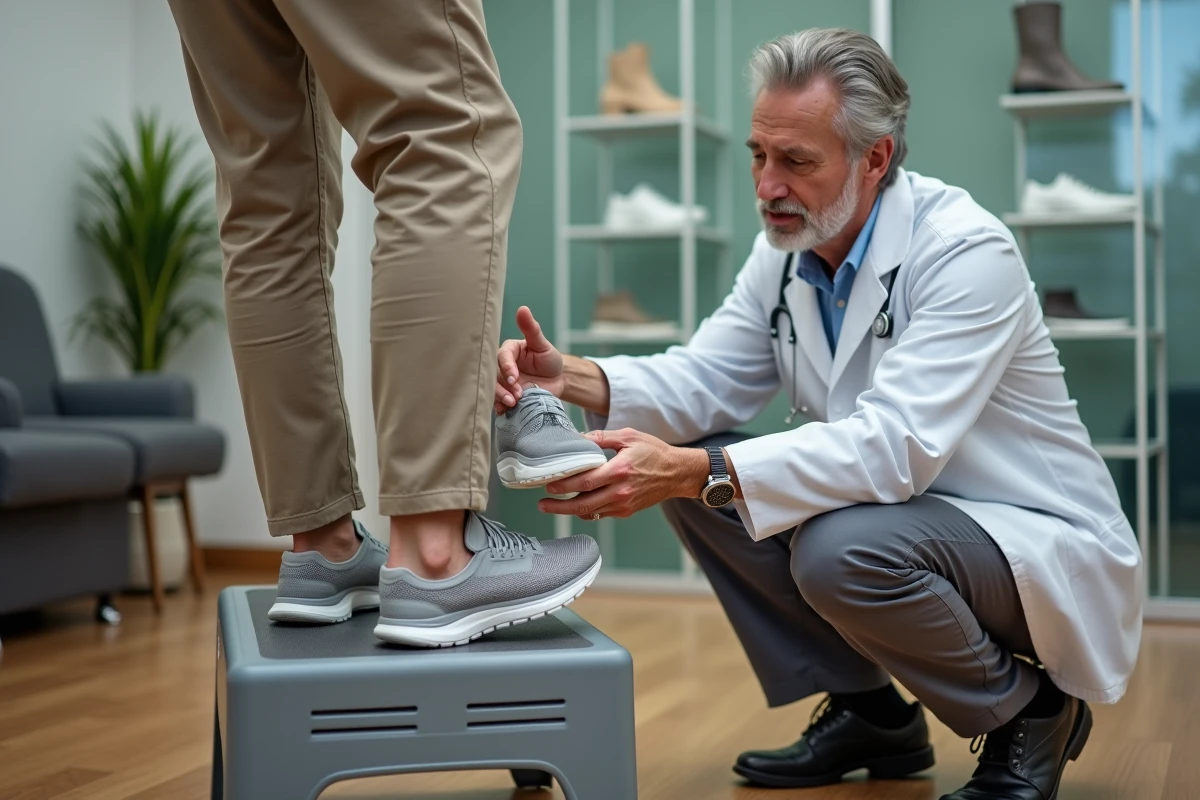
You may have already noticed that feeling of “walking on a cloud” when slipping on a memory foam Skechers? This immediate sensation explains a large part of the commercial success. The sole conforms to the shape of the foot, absorbs shocks, and gives a feeling of lightness from the very first steps.
Podiatrists acknowledge that significant cushioning can provide short-term relief, especially for people suffering from heel pain or standing for long hours. In this regard, the Go Walk and Arch Fit ranges fulfill their role.
The problem arises in the medium term. A very soft and thick sole reduces proprioception, meaning the foot’s ability to perceive the ground and adjust its posture in real-time. Essentially, the foot “falls asleep” in the shoe. The stabilizing muscles work less, and certain imbalances can gradually set in.
The case of overly soft soles without a heel counter
When the sole compresses under the body’s weight without offering resistance, the pronating foot (which rolls inward) sees its defect amplified. A soft sole without supportive structure exacerbates excessive pronation. Podiatrists particularly warn about lifestyle models or flat references without reinforcement at the heel.
For neutral or slightly high-arched feet, the observation differs. The cushioning works correctly when paired with good lateral support and a firm rear heel counter, as seen in the Arch Fit range.
Skechers recommended by podiatrists: which profiles and which models
The question is not “are Skechers good or bad?” but “which Skechers model is suitable for which foot?”. Podiatrists distinguish several situations where certain ranges provide real benefits.
- Prolonged standing and daily walking: the Arch Fit and Go Walk ranges, with their pre-shaped arch, offer appropriate support for people walking several hours a day or working on their feet
- Seniors post-hospitalization: closed models with a rigid heel counter, less thick sole, and moderate drop are sometimes recommended as a compromise between comfort and safety, particularly to limit the risk of falls
- Recovery after sports activity: generous cushioning is suitable during active rest, provided these shoes are not used as running shoes per se
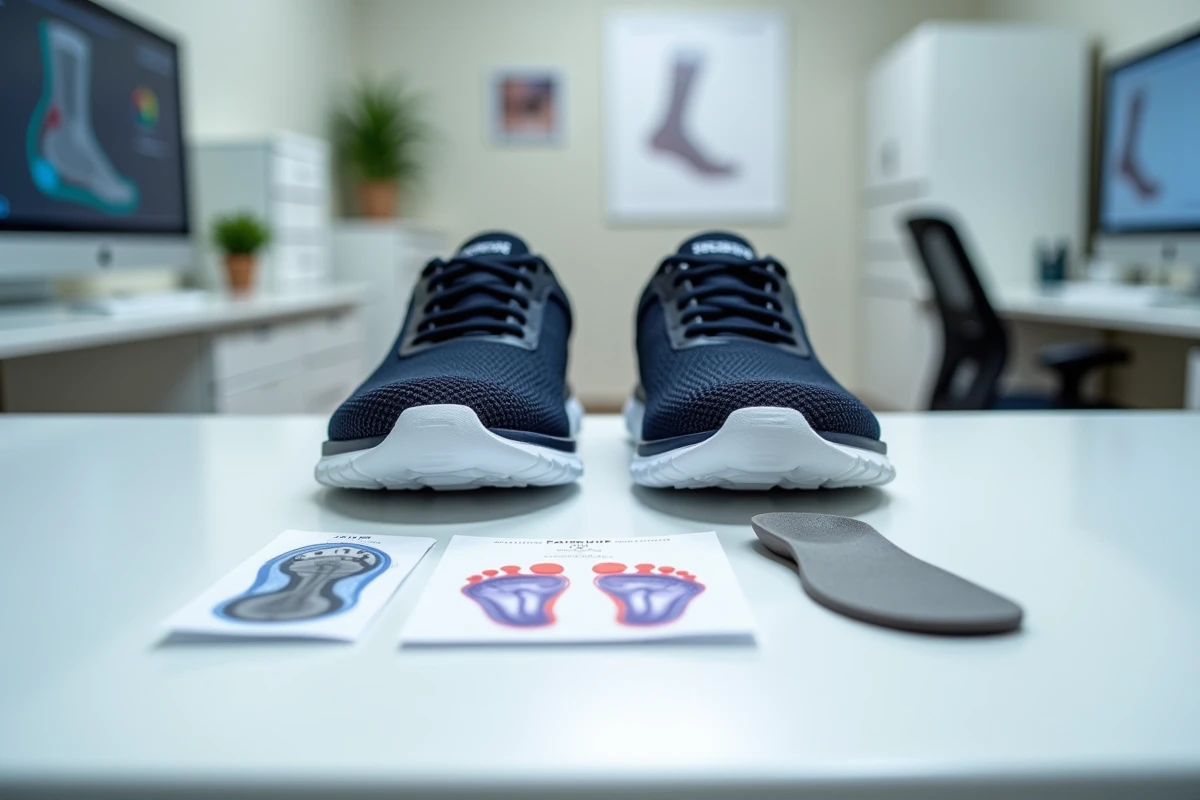
On the other hand, for regular running, podiatrists rarely direct towards Skechers. Lateral support remains insufficient on most of the brand’s mainstream models, and specialized running shoes offer better control of foot movement.
Criteria for choosing a pair of Skechers according to podiatrists
Rather than relying on fitting comfort in-store, foot health professionals suggest checking specific technical points before purchase.
- The rear heel counter: press the back of the shoe between your fingers. If it collapses easily, heel support will be insufficient
- Torsional rigidity: take the shoe at both ends and twist it. A shoe that twists like a rag will not stabilize your foot
- The arch support: run your hand inside. You should feel a firm relief under the arch of the foot, not a flat surface
- The width of the forefoot: your toes should be able to spread naturally, without lateral compression
These criteria allow for quickly eliminating unsuitable models and focusing on structured ranges. A model that fails the torsion test should be avoided, regardless of its price or perceived comfort level.
Removable insole: a detail that matters
If you wear orthotic insoles, check that the insole of the Skechers is removable. Several Arch Fit models allow this. Sliding an orthotic into a shoe with the original insole in place creates excess volume that alters the fit and nullifies the benefits of the orthotic.
Podiatrists prefer a neutral and well-constructed shoe in which they can insert their correction, rather than a “therapeutic” marketing shoe that does not correspond to the patient’s biomechanics.
The choice of a suitable pair of Skechers depends on the range, not the brand. Models validated by the APMA, equipped with a rigid heel counter and firm arch support, meet podiatrists’ expectations for walking and standing. Soft models without structure remain leisure shoes, not allies of foot health.