In cooking, precision is often the key to a successful recipe. The various measurement systems can complicate matters, especially when it comes to converting metric units to imperial or vice versa. Whether you are a seasoned baker or a weekend cook, it’s important to master a few tips to adjust quantities without errors. Having simple equivalents at hand, using the right tools, or even understanding the logic behind conversions allows you to navigate easily between grams, ounces, cups, and milliliters.
Understanding Measurement Units in Cooking: Keys to Error-Free Conversions
In the culinary arts, mastering measurement units is fundamental to success. Converting grams to ounces, or milliliters to cups, can sometimes be a puzzle for the uninitiated. Metric units, widely adopted in countries like Canada, contrast with imperial measurement units, still in use in various regions. For ingredients, the difference between an ounce and a gram is significant: 28.35 grams make up an ounce. Understand these subtleties to handle recipes with precision.
Recipes, often a source of creativity, nonetheless require a near-scientific rigor. The quantities of ingredients presented in ounces or pounds demand particular attention. For liquids, remember that 1/4 liter to cl equals 25 cl, a measurement frequently encountered in drink or sauce recipes. Master these equivalents; they are the key to a flawless kitchen.
Temperature also plays a fundamental role. Canadian recipes using degrees Celsius must be adapted to degrees Fahrenheit for those using ovens calibrated according to the imperial system. The formula for conversion is simple: multiply degrees Celsius by 9, divide by 5, then add 32. This rule allows for a smooth transition from Celsius to Fahrenheit.
Solid weights are no exception. Knowing that 1000 grams make a kilogram seems basic, but converting these grams to pounds knowing that a pound is approximately 453.59 grams requires practice. Keep these conversions in mind to ensure a faithful transposition of recipes, especially when juggling between metric and imperial systems.
Techniques and Tools for Easily Converting Measurements in Cooking
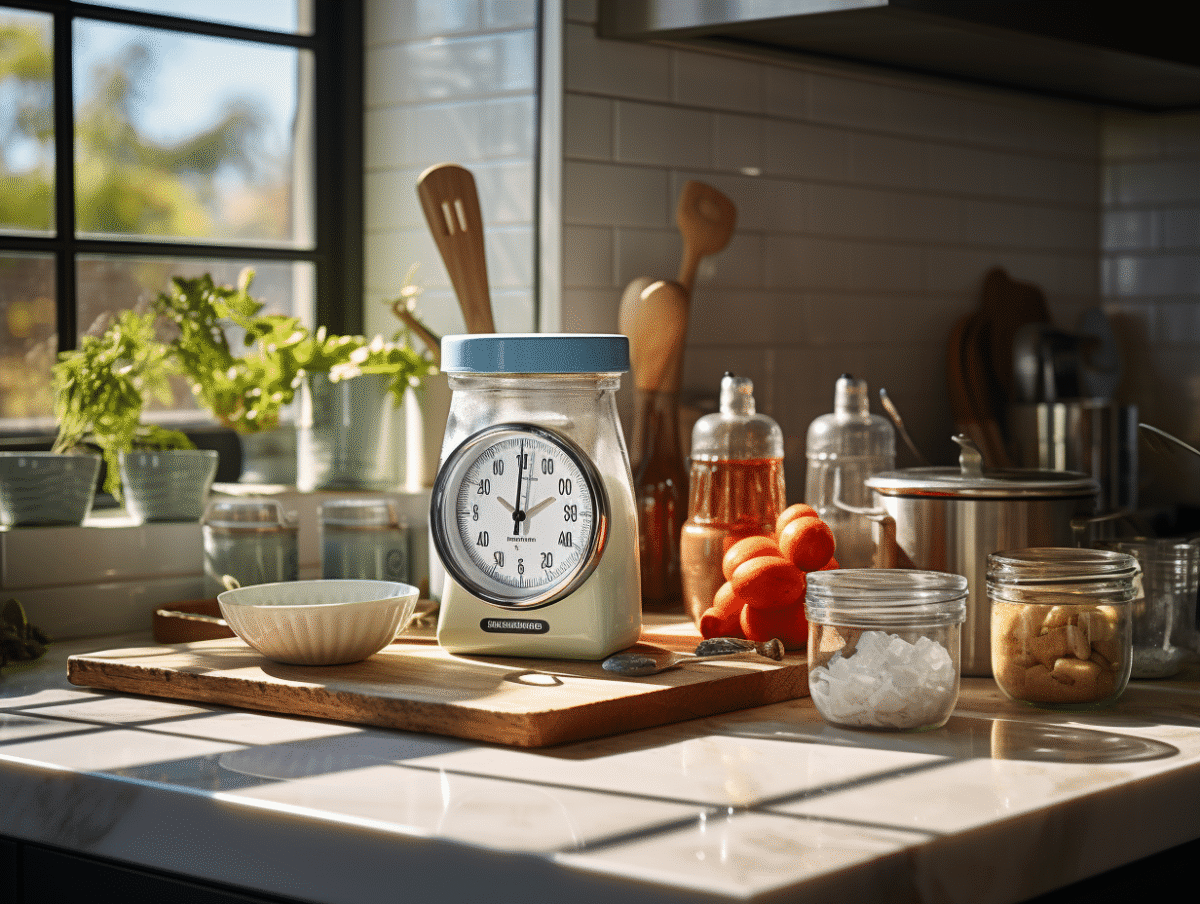
In the culinary field, a few specific kitchen utensils are valuable allies for performing measurement conversions with ease. A scale and measuring cup, for example, allow for accurate measurement of the ingredients needed. With these tools, conversions from grams to milliliters or vice versa can be done effortlessly. Don’t forget to use tablespoons and teaspoons, graduated to correspond to precise measurements; they facilitate the dosing of small quantities, especially for spices and liquids.
Conversion charts are another valuable tool. Hung on a wall in your kitchen or kept in a drawer within reach, they provide a quick reference for switching from imperial to metric units, whether for solid or liquid measurements. These charts summarize practical equivalents and help avoid common conversion errors. Consult them to ensure the integrity of the proportions suggested by recipes, particularly those requiring great precision like in baking.
Modern technology has entered our kitchens in the form of mobile applications and dedicated websites. These digital resources, often free, offer automatic conversions and can store information about specific ingredients. Additional features, such as calculating the ideal cooking temperature or converting measurements to adjust recipes for a different number of guests, are undeniable assets. Integrate these digital tools into your culinary practices for flawless conversions and a significant time-saving.