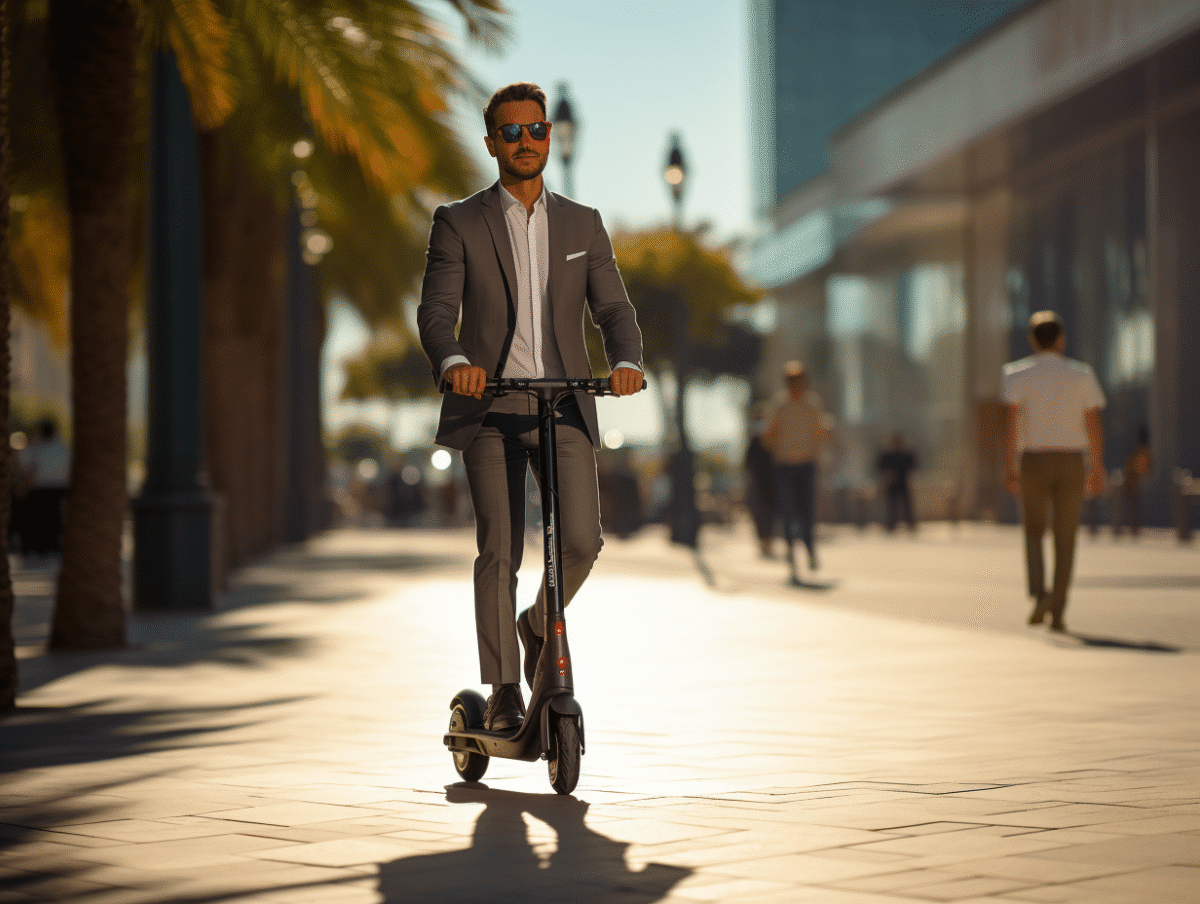
Urban mobility is undergoing a profound transformation, driven by the need to reduce pollution and congestion in cities. Small-displacement vehicles, such as scooters and motorcycles, are emerging as practical solutions. They offer the advantages of compactness and agility in dense traffic, while being more affordable than cars. With the rise of environmental concerns, electric models of these vehicles are gaining popularity, promising cleaner and quieter mobility. This phenomenon influences urban transport policies, as well as the development of infrastructure to secure and encourage their use.
The challenges of urban mobility in the face of the rise of small-displacement vehicles
At the heart of discussions during the Motorcycle, Scooter, Quad and Equipment Show taking place at Paris Expo Porte de Versailles, small-displacement vehicles, particularly electric ones, are taking on a crucial dimension in the urban mobility equation. Their growth is both a response to environmental challenges and an adaptation to new regulations, such as Low Emission Zones (LEZ) and the Crit’Air system.
The implementation of these zones, along with the requirement for vehicles to comply with the Euro 4 standard, directly affects the landscape of two-wheelers in our cities. Thierry Archambault, deputy president of CSIAM, believes that the future of electric scooter sales is promising, despite a still nascent market. The shift to electric is not without its challenges, but it is part of a sustainability logic that seems irreversible.
Manufacturers are not mistaken. Recognized brands such as Peugeot with its Electric Box offering, as well as Piaggio, Yamaha, and even historical players like Triumph or Harley-Davidson France, are boldly positioning themselves in this niche. Electric urban models are gaining visibility and attractiveness, responding to a growing demand for softer and more environmentally friendly urban mobility.
The road to fully electric urban mobility is fraught with obstacles. Charging infrastructure, government incentives, and user acceptance are major challenges. In this context, industry players, as detailed in ‘Autos Actus’, are striving to promote viable mobility solutions. The transition to electric scooters and other small-displacement vehicles is underway, and it could well redefine the contours of our cities in the coming years.

Small-displacement vehicles as a sustainable solution: between trends and regulations
In the wake of environmental awareness and increasingly strict urban regulations, small-displacement vehicles are emerging as a viable alternative. Electric scooters and light electric vehicles are part of a soft urban mobility approach, seeking to reduce carbon footprints and facilitate circulation in saturated urban spaces.
Like Cycleurope, led by Jérôme Valentin, which offers a range of brands including Gitane and Peugeot, companies are committing to producing environmentally friendly vehicles. Peugeot’s Electric Box offering fits into this logic, providing electrified mobility solutions tailored to urban needs.
In a competitive market, brands such as Yamaha, led by Eric de Seynes, and Triumph, with its Bonneville-inspired line led by Jean-Luc Mars, are innovating to stay ahead. They are developing urban models that combine design, performance, and compliance with new environmental standards.
Harley-Davidson France, under the leadership of Gérard Staedelin, is also not lagging behind. The American brand, known for its distinctively roaring motorcycles, is reinventing itself by embracing electric to meet the aspirations of an urban clientele concerned about the environment. Urban mobility vehicles are transforming, and with them, the entire face of mobility in cities is undergoing a revolution.