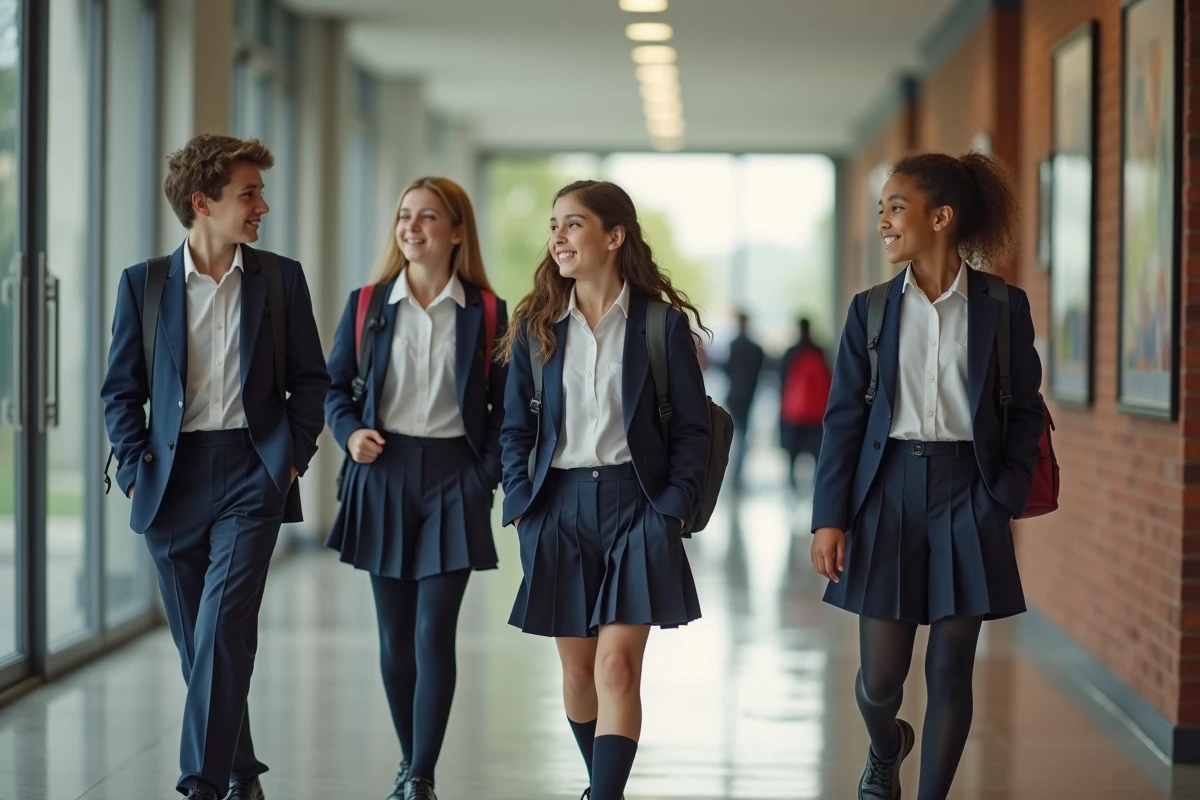
A raw figure, and everything shakes: nearly one in five children in France attends a private school. In the shadow of debates on equality of opportunity, the question of choosing between public and private schools continues to shape very contrasting paths. It is not simply a preference, but a genuine family commitment, influenced by sometimes unknown rules and very real stakes.
In France, the school map dictates the orientation of students in the public sector: each geographical area is entitled to a designated school, with no possibility of choosing elsewhere. Private schools under contract do not suffer from this division: any parent can target the institution of their choice, whether it is at the other end of the city or even further away. This freedom of enrollment profoundly influences the diversity of paths and the social composition of classes. On the financing side, the gap is equally clear. Public schools are funded by the state, and no contribution is requested from families. Private institutions under contract receive a portion of public funding but also demand tuition fees, which vary depending on the location. In private schools outside the contract, families bear almost the entire burden, sometimes with the support of internal scholarships. Admission modes, pedagogies, and life rhythms adjust to these realities, creating significantly different school environments that weigh heavily on students’ experiences.
Public and Private Schools: The Characteristics That Make the Difference
Funding first, clearly delineates the contours. Public school offers total free education, from the first notebook to the diploma, guaranteed by public authority. No hidden fees: here, every family finds the will to welcome all children, according to a principle of secularism and social diversity clearly displayed. Public teachers are recruited through national competitions, trained in the same logic of equal access for all.
In contrast, private schools present a plural functioning. Institutions under contract with the state respect national programs, their teachers are contractual, but the enrollment price varies from one institution to another. In the non-contract sector, there is great pedagogical freedom: some emphasize a religious identity, others deploy Montessori methods or programs for atypical children. These institutions recruit their own teachers, sometimes without the filter of a competition or a national diploma, and also set their own admission criteria. Access can therefore depend on a file or an interview, which influences the composition of classes.
Some figures to reframe the panorama: 18% of French students were enrolled in private schools in 2024, and only 4.6% in Switzerland. The reasons? Individualized follow-up, smaller classes, bilingual projects, or welcoming specific profiles. In practice, each type of institution develops its specificities and strengths, but also its own limitations.
To understand all the differences between private and public schools, one must closely examine issues of funding, educational projects, religious neutrality, and understand their impact on students’ daily lives. Making a school choice is about outlining a framework of values and ambitions for one’s child.
Funding, Programs, Environment: The Concrete Differences on the Ground
Three aspects really structure the comparison. Let’s examine them:
Funding: Public schools operate exclusively on public funds. No enrollment fees, no annual costs to anticipate, everything is covered. In private schools under contract, the financial contribution from families adds to the subsidy: the entry ticket varies and can represent a significant effort depending on the institution. Outside of contracts, schooling largely relies on the family budget, although some institutions offer tailored assistance. The cost, clearly, influences the choice.
Programs and Recruitment: Public and private schools under contract follow the same educational roadmap, under the supervision of academic inspection. Teachers: holders of a competition (CAPES, CRPE) in the public sector; contractual in private under contract, recruited after the CAFEP. Non-contract schools benefit from broader autonomy: adapted programs, original pedagogical methods, and teachers who can be simply recruited based on their experience or motivation, without national certification.
Environment and Support: Large public classes welcome a social mosaic, sometimes with significant numbers but a substantial mix of origins and profiles. Many private institutions offer smaller groups, more individualized contact, and the promise of close follow-up. Bilingual options, sports activities, support programs for children with disabilities: the landscape is varied, and private structures know how to target specific expectations. However, longitudinal studies show that academic results do not vary significantly according to the school’s status.
To summarize these differences, here are, in brief, the markers according to the type of institution:
- Public: free schooling, secularism, teachers from national competitions, marked social diversity
- Private under contract: variable enrollment fees, partial financial support from the state, respect for the national program, contractual teachers
- Private outside contract: great pedagogical freedom, sometimes very high enrollment fees, independently recruited teachers

How to Choose a School Suitable for Your Child?
To guide this decision, three axes compensate for the initial doubt: the available budget, the values that the family holds, and the specific educational needs of the child. The financial aspect often sets a first framework: public education requires no funding, while private education necessitates planning for an investment that can sometimes be difficult to absorb. Scholarships exist in some institutions, but they do not always suffice to erase access inequalities.
The educational project weighs just as much. If the defense of secularism, equality, or social diversity holds a strong place in the household, the choice of public often prevails. Other families seek a smaller environment, a different pedagogy, or tailored programs for atypical or mobile children. Private schools, especially those outside contracts, then stand out for the variety of their offerings and their ability to adjust. But public schools guarantee the strict application of national content.
Changing schools remains open, from public to private without formality. Returning to public education after a period in a private non-contract school requires a level test: this step, often overlooked, deserves to be anticipated to avoid surprises upon return.
Here are some concrete criteria to examine based on the situations:
- Study the educational project offered: look at the content of teachings, the methods used, and the specific languages or activities highlighted.
- Observe the social composition of the institution, and assess whether the school climate corresponds to your child’s profile and expectations.
- Weigh the financial effort and the possibility of ensuring stability throughout the schooling.
Choosing a school is much more than just a simple enrollment form: it is about outlining a trajectory, setting markers for the future, and often, embracing a strong vision of education and living together. Each family draws its own line, with its reasons, desires, and the part of the unknown that always persists in building a path.